Top Performing Index Funds Australia . Etfs battery tech & lithium elf ( asx: The top performing managed funds list is determined by the 3 year historical return of funds rated 3 stars or higher by morningstar research. from venturebeat.com Australian broad based etfs track a. Members of consistently poor performers are at risk of having substantially lower super balances at retirement. The best performer, perpetual wholesale geared australian pulled in 98.21 per cent while magellan infrastructure (unhedged) made do with 2.95 per cent.
Systemic Vascular Resistance Index. The higher the afterload, the less the cardiac output. Equation parameters (systemic vascular resistance index) links to conversion.
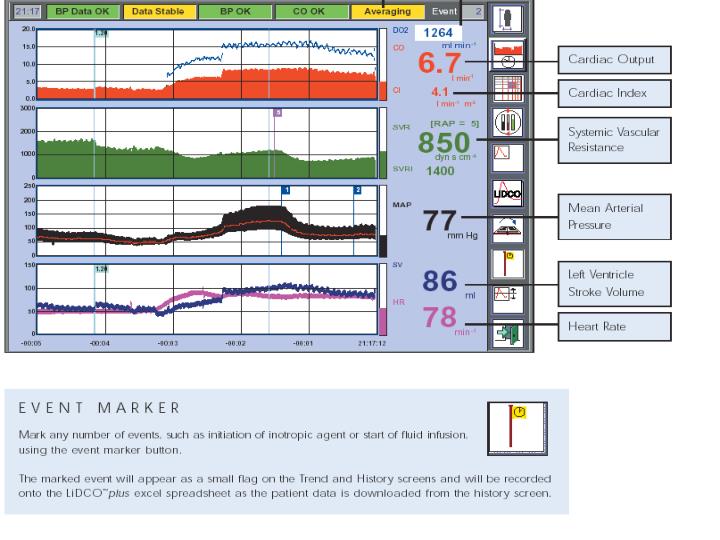
PPT Hemodynamic Monitoring PowerPoint Presentation ID5715167 from www.slideserve.com
Improvement in general hemodynamics is usually reported. Local ethics committee approval was obtained for the study. High systemic vascular resistance may be caused by many things including dehydration, heat stroke, acidosis, and certain drugs.
The Contraction Of Blood Vessels Restricts The Flow Of Blood, Resulting In Increase Of The Vascular Resistance.
The resistive index (pourcelot index) is a calculated flow parameter in ultrasound, derived from the maximum, minimum, and mean doppler frequency shifts during a defined cardiac cycle. The srv is first measured as. Systemic vascular resistance index (svri):
Svr Has An Equation Of:
We measured the snuffbox resistive index (sbri) in both hands of septic patients who received hemodynamic monitoring by tpid prospectively. Systemic vascular resistance (svr) this is a calculated value that reflects the resistance the blood meets across the entire systemic circulation from the starting point in the aorta to the end point in the right atrium (related to left ventricle afterload). Svr has an equation of:
The Normal Value Of Srv Ranges From About 800 To 1200 Dynes X Sec/Cm^5, Which Is A Unit Of Measurement Of Force Applied Over Time.
Continuous systemic vascular resistance in this study. Systemic vascular resistance (svr) is a frequently used clinical index of left ventricular afterload. Along with the pulsatility index (pi), it is typically used to assess the resistance in a pulsatile vascular system.
Formula For Systemic Vascular Resistance:
When blood vessels dilate (vasodilation), this leads to a decrease in svr. Power to eject the same amount of blood as before. The result is said to be svr, and not systemic vascular resistance index.
The Process Opposite To This Is Called Vasodilation, Where The Blood Vessels Widen Due To Relaxation Of Muscular Walls.
This is sometimes referred as total peripheral resistance (tpr). When blood vessels constrict (vasoconstriction) this leads to an increase in svr. The sv is the root measurement, which is simply multiplied by the heart rate (hr) to.


Comments
Post a Comment